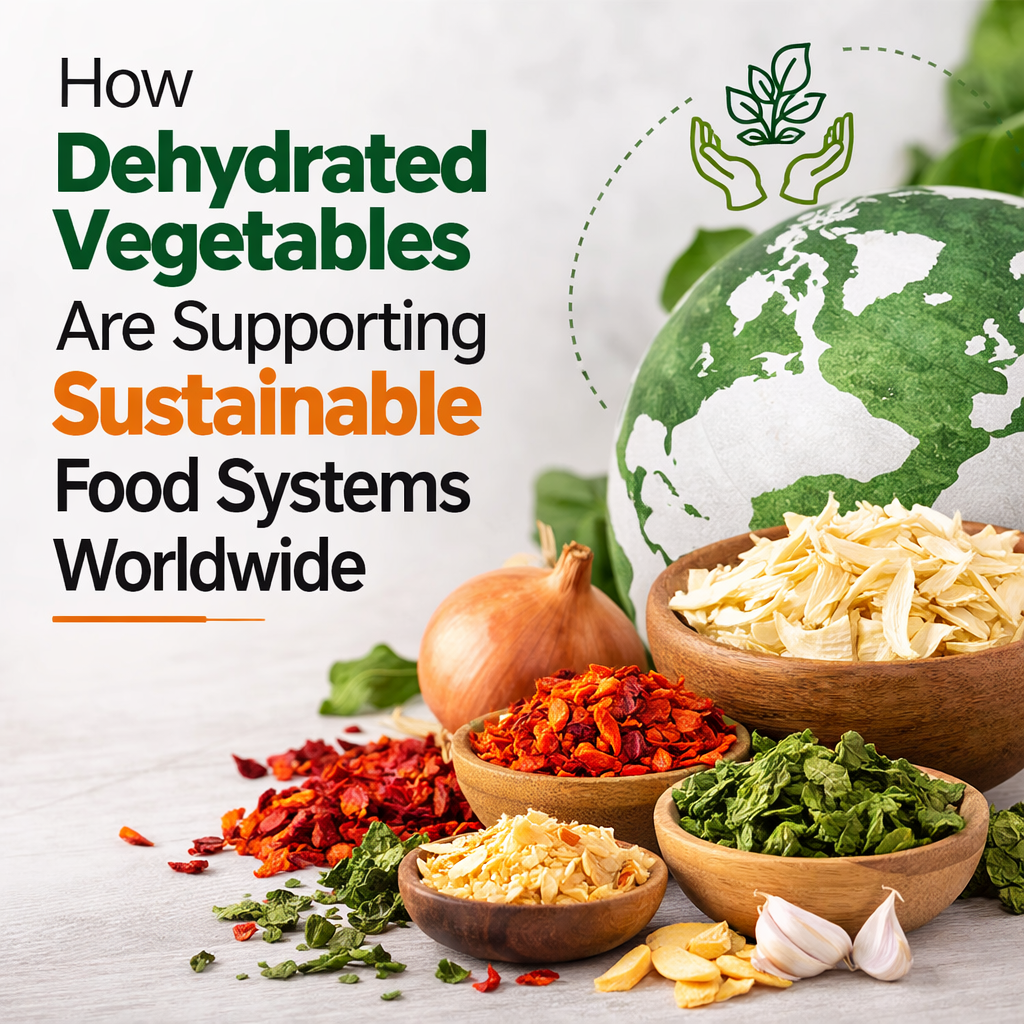
In recent years, sustainability has become one of the most important topics in the global food industry. As the world population continues to grow, the demand for food is increasing while natural resources such as water, land, and energy are becoming more limited. At the same time, food waste remains a major challenge across the supply chain. One effective solution that helps address both issues is food dehydration. Dehydrated vegetables and spices are gaining popularity worldwide because they offer longer shelf life, easier transportation, and reduced waste compared to fresh produce. Companies like Balaji Dehydration are contributing to this shift by supplying high-quality dehydrated ingredients to food manufacturers and distributors across global markets.
Fresh vegetables contain a high percentage of water, which makes them highly perishable. From harvesting and transportation to storage and retail, many vegetables can spoil before they even reach consumers. This spoilage leads to significant food losses every year. Dehydration helps solve this problem by removing moisture from vegetables, which slows down microbial growth and prevents rapid spoilage. Once the water content is reduced, vegetables become more stable and can be stored for a much longer period without refrigeration. This extended shelf life makes dehydrated vegetables an efficient and practical ingredient for both domestic and international food supply chains.
The food processing industry increasingly relies on dehydrated vegetables for a variety of products. Ready-to-eat meals, instant noodles, soups, sauces, seasoning mixes, and snack foods often contain dehydrated onions, garlic, chili flakes, ginger, and other vegetables. These ingredients provide strong flavor and aroma while maintaining consistency in large-scale production. Because dehydrated vegetables are lightweight and compact, they are easier to store and transport compared to fresh produce. This also reduces transportation costs and makes international trade more efficient.
Sustainability is another major advantage of dehydrated food products. Transportation of fresh vegetables requires refrigeration and careful handling to prevent spoilage. Dehydrated products, on the other hand, require less storage space and do not always need temperature-controlled logistics. This reduces energy consumption during transportation and storage. In addition, vegetables that may not meet the visual standards for retail markets can still be processed through dehydration, helping farmers and producers reduce agricultural waste while maximizing the use of harvested crops.
The global demand for dehydrated vegetables is growing rapidly as more food companies look for reliable and long-lasting ingredients. Countries in Asia, Europe, the Middle East, and North America are importing dehydrated products for use in their food manufacturing sectors. India has become one of the key suppliers in this market because of its strong agricultural base and growing food processing industry. Companies such as Balaji Dehydration are playing an important role by processing and exporting dehydrated vegetables that meet international quality and safety standards.
Another reason dehydrated vegetables are becoming essential in modern food systems is their convenience. Food manufacturers require ingredients that are easy to store, measure, and integrate into recipes. Dehydrated products offer this flexibility while maintaining natural taste and nutritional value. Advances in dehydration technology also ensure that the color, aroma, and flavor of vegetables are preserved as much as possible during the drying process.
As sustainability and efficiency continue to shape the future of the food industry, dehydrated vegetables are expected to play an even greater role in global food supply chains. They provide a practical solution for reducing waste, improving storage, and supporting international trade. With growing awareness about sustainable food production and efficient resource use, companies involved in dehydration are helping build a more resilient food system.
Businesses like Balaji Dehydration are not only producing dehydrated ingredients but are also contributing to a larger movement toward responsible food processing and global food sustainability. By delivering consistent quality and supporting international demand, they help ensure that food manufacturers around the world have access to reliable ingredients that support both efficiency and sustainability.