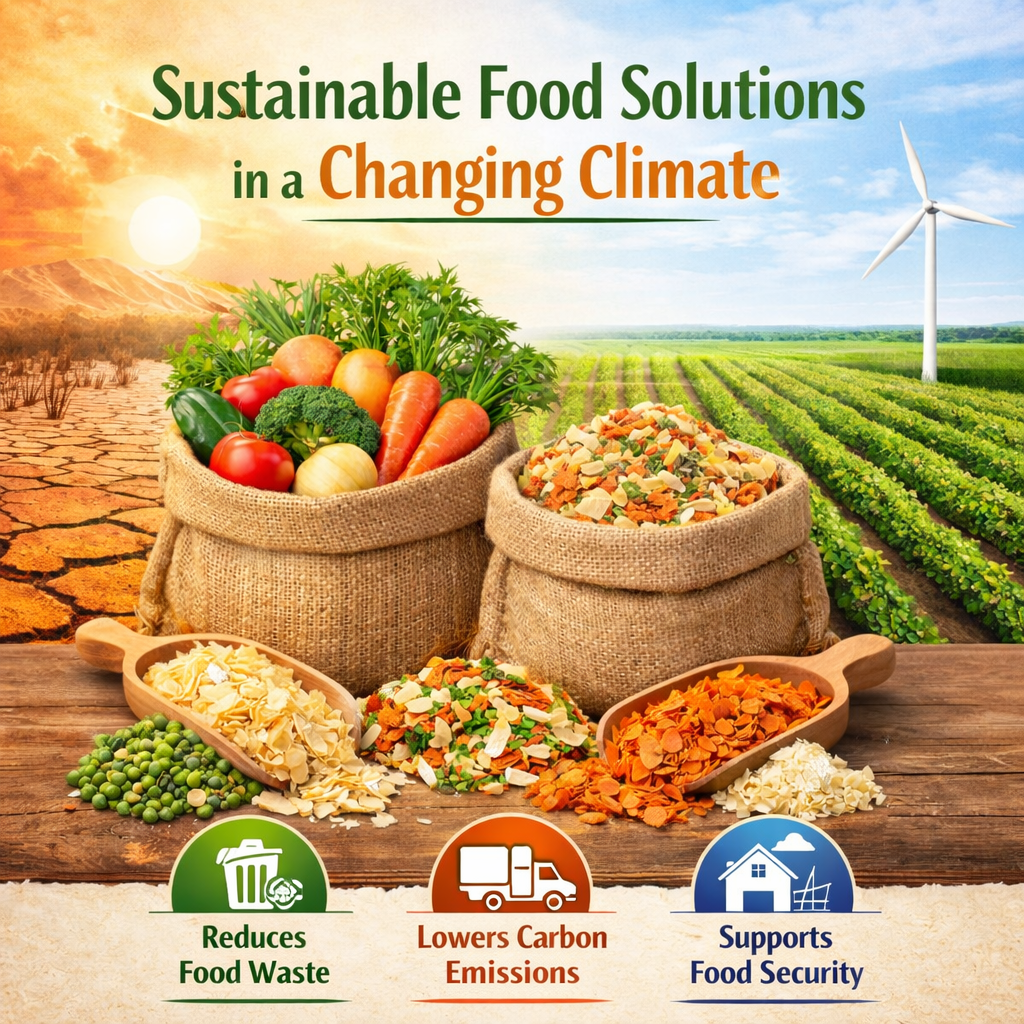
Climate change is one of the most serious challenges facing the global food system today. Rising temperatures, unpredictable rainfall patterns, and increasing pressure on agricultural resources are making it more difficult to produce, store, and distribute fresh food efficiently. As the world searches for more sustainable ways to ensure food availability while reducing environmental impact, food preservation technologies are becoming increasingly important. One of the most effective and practical solutions is vegetable dehydration. Through advanced dehydration processes, vegetables can be preserved for long periods while maintaining their usefulness for the food industry. Companies such as Balaji Dehydration play a key role in this transformation by providing high-quality dehydrated vegetables that support sustainability, reduce food waste, and help create a more climate-resilient food supply chain.
One of the biggest environmental problems in the food industry is food waste. A large portion of fresh vegetables produced globally never reaches consumers because they spoil during storage, transportation, or distribution. Fresh vegetables contain a high amount of moisture, which makes them highly perishable. When vegetables are not used quickly enough, they begin to deteriorate, leading to significant losses for farmers, distributors, and food companies. This waste not only represents a loss of valuable food resources but also contributes to greenhouse gas emissions because wasted food eventually decomposes and releases methane into the atmosphere. Dehydrated vegetables help address this issue by significantly extending the shelf life of produce. By removing most of the moisture from vegetables soon after harvest, dehydration slows down the growth of microorganisms and prevents rapid spoilage. This means that vegetables can be stored and transported for much longer periods without being wasted, making dehydration an effective strategy for reducing the environmental footprint of the food supply chain.
Another important benefit of dehydrated vegetables in the context of climate change is their efficiency in transportation and logistics. Fresh vegetables are heavy because they contain a large percentage of water. Transporting large quantities of fresh produce requires significant fuel consumption, refrigerated vehicles, and careful handling to prevent spoilage. In contrast, dehydrated vegetables are much lighter and more compact because the moisture has been removed during processing. This reduction in weight and volume allows larger quantities of vegetables to be transported in a smaller space. As a result, fewer shipments are required, and less fuel is consumed during transportation. Lower fuel consumption directly translates into reduced carbon emissions, which contributes to more environmentally responsible food distribution. For companies operating in the global food market, using dehydrated ingredients can therefore play an important role in lowering the carbon footprint of their supply chains.
Energy consumption is another critical factor when evaluating the sustainability of food systems. Fresh vegetables often require continuous refrigeration to maintain their quality during storage and transportation. Refrigeration systems consume large amounts of electricity and contribute to greenhouse gas emissions, particularly in regions where energy is generated from fossil fuels. Dehydrated vegetables, however, can often be stored under controlled ambient conditions without the need for intensive refrigeration. Because the moisture has been removed, the risk of microbial growth and spoilage is greatly reduced. This allows food manufacturers and distributors to store dehydrated ingredients for longer periods without relying heavily on energy-intensive cooling systems. The ability to store food efficiently without excessive energy use makes dehydration an environmentally friendly preservation method in the context of global climate challenges.
Climate change is also affecting agricultural production by creating irregular growing conditions. Farmers around the world are experiencing unpredictable weather patterns, including droughts, heavy rainfall, and extreme temperatures. These conditions can lead to periods of surplus production followed by periods of shortage. When there is an oversupply of vegetables during harvest seasons, a large portion may go unused because fresh produce cannot always be consumed or distributed quickly enough. Dehydration provides an effective solution to this problem by allowing vegetables to be preserved during peak harvest periods and stored for future use. This helps stabilize the availability of ingredients throughout the year and reduces the pressure on agricultural production during challenging climate conditions. By enabling long-term preservation of seasonal crops, dehydration supports better resource management and promotes a more resilient agricultural system.
Dehydrated vegetables also support sustainability by improving efficiency in food manufacturing. Many food manufacturers rely on consistent, ready-to-use ingredients that can be stored for extended periods without quality issues. Dehydrated vegetables meet these requirements while reducing the need for frequent deliveries of fresh produce. Their longer shelf life and ease of storage help manufacturers maintain steady production without the risk of ingredient spoilage. This stability is particularly valuable in the production of packaged foods, ready-to-eat meals, snacks, and instant food products.
By integrating dehydrated ingredients into their processes, food manufacturers can streamline their operations while contributing to more efficient resource utilization across the food supply chain.In addition to environmental benefits, dehydrated vegetables help create a more reliable global food distribution network. Because they can be stored and transported more easily than fresh vegetables, they can reach regions where fresh produce may be difficult to supply consistently. This capability is especially important in situations where climate change disrupts agricultural production or supply chains. By preserving vegetables in dehydrated form, food producers can ensure that essential ingredients remain available even when fresh produce is limited. This contributes to food security and helps maintain stable food production in a changing climate.
Balaji Dehydration contributes to this sustainable approach by focusing on the processing and supply of high-quality dehydrated vegetables that support modern food manufacturing needs. Through advanced dehydration techniques and strict quality control standards, the company helps transform fresh vegetables into long-lasting ingredients that can be used across various food applications. By extending the usability of agricultural produce and reducing waste throughout the supply chain, dehydration processes support the broader goal of building a more sustainable and climate-resilient food industry.
As climate change continues to reshape the way food is produced and distributed, the importance of efficient food preservation methods will continue to grow. Dehydrated vegetables provide a practical and scalable solution that addresses several key environmental challenges, including food waste, transportation emissions, energy consumption, and supply chain instability. By preserving vegetables in a form that is lightweight, long-lasting, and easy to store, dehydration technology helps reduce the environmental impact of food production while ensuring that valuable agricultural resources are used more efficiently.
In conclusion, dehydrated vegetables represent an important step toward creating a more sustainable food system in the face of climate change. Their ability to reduce waste, lower transportation emissions, minimize energy use, and stabilize food supply chains makes them a valuable resource for the global food industry. Companies like Balaji Dehydration play a significant role in this transition by providing reliable dehydrated vegetable ingredients that support both environmental sustainability and long-term food security. As the demand for climate-friendly food solutions continues to grow, dehydration technology will remain a key contributor to building a more resilient and responsible global food system.